

- L. acidophilus benefits animal health, but consistent commercial farm results remain elusive.
- Strongest evidence in piglets with improved gut health, growth and disease resilience.
- Researchers call for more large-scale farm trials.
Conducted by Chinese researchers, the review delved into research on the probiotic bacterium Lactobacillus acidophilus (L. acidophilus), a “well-characterised lactic acid bacterium commonly found in the gastrointestinal tract of animals”.
The review describes L. acidophilus as one of the most promising alternatives to antibiotic growth promoters (AGPs).
L. acidophilus has been noted for its ability to suppress harmful bacteria, strengthen the gut barrier, regulate immune responses and improve the balance of microbes in the digestive tract.
However, the authors argue that translating these findings into consistent on-farm results remains a significant challenge.
While scientists are clear that the microbe can benefit animal health, evidence from real-world farming systems remains less clear-cut than the laboratory data might suggest.
This highlights a growing disconnect between scientific understanding and commercial validation of L. acidophilus.
Hardly straightforward answers
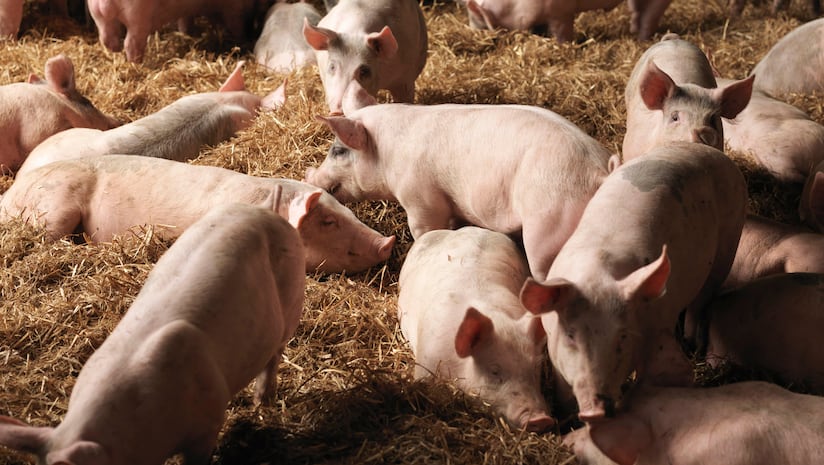
The strongest evidence so far is in pig production, particularly during the weaning period.
Weaned piglets often experience digestive disturbances, reduced feed intake and increased susceptibility to disease, making them a key target for probiotic interventions.
Across numerous studies, L. acidophilus supplementation was associated with improved growth performance, enhanced nutrient digestibility, stronger gut barrier function and reduced inflammation.
The consistency of these findings has made piglets the clearest success story for the probiotic to date, said the researchers.
Beyond hogs, however, the results are less certain.
For instance, in poultry, studies have linked L. acidophilus to improvements in gut health, immune responses and resistance to pathogens.
Some research also suggests the bacterium could enhance vaccine responses by increasing antibody production.
Yet the review notes that positive outcomes are not observed uniformly across studies, with differences in bird genetics, management systems, diets and product formulations often influencing results.
In cattle and other ruminants, the evidence is even more limited.
While some studies indicate potential benefits for calf health and diarrhoea reduction, there is insufficient evidence to say that L. acidophilus consistently improves production performance, milk yield or rumen function.
Why the gap?
One reason for the inconsistent findings is that many studies have been conducted under controlled experimental conditions rather than commercial production environments, the authors suggested.
The largest benefits are frequently reported in disease-challenge models, where animals are deliberately exposed to pathogens or other stressors.
Under these conditions, probiotics often help maintain gut health and reduce the severity of infection.
In contrast, commercial farms are influenced by a far wider range of variables, including feed composition, housing, stocking density, climate and existing disease pressure.
Despite its promise, the authors note several challenges when it comes to using L. acidophilus.
Firstly, probiotic effects vary depending on the strain used, the animal species, diet, age and farming conditions.
Another practical issue is that L. acidophilus is sensitive to heat and oxygen, which can lead to bacteria dying during feed processing or storage unless protective technologies are used.
Promising but more work needed
The review concluded that L. acidophilus was one of the most promising probiotic alternatives to antibiotic growth promoters in livestock production.
The evidence is strongest for improvements in gut health, intestinal barrier integrity, immune regulation, and disease resistance, particularly in swine and poultry.
Moving forward, the authors believe development will move towards precision probiotic strategies tailored to specific species, developmental stages, and production environments.


