

Swiss agtech company OneSoil is betting that the next frontier in precision agriculture is not generating more data, but making sense of the data farmers already have.
With the launch of its AI Agronomist, an in-app assistant embedded in the OneSoil Platform, the company is positioning itself as a solution to one of farming’s most persistent digital bottlenecks: fragmented information streams that are difficult to interpret and act on.
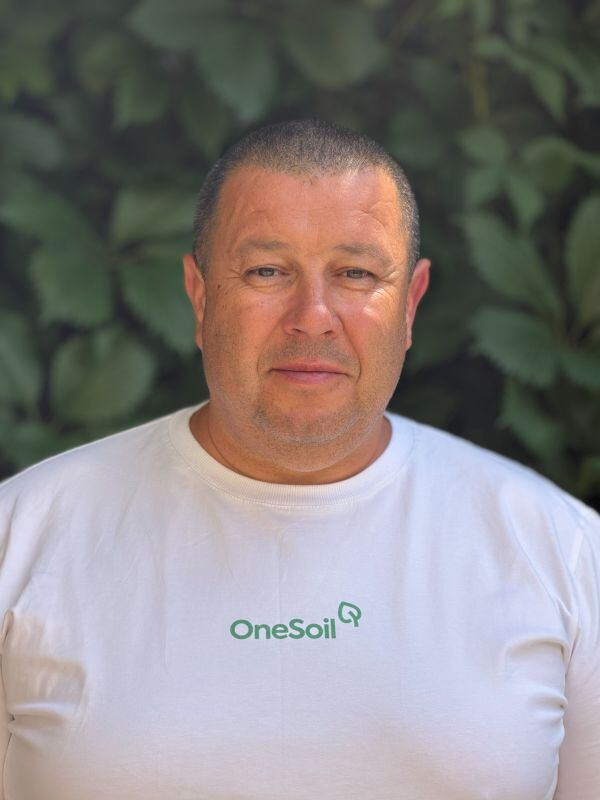
“Instead of 20 dashboards, farmers get just one good answer,” said CEO Stepan Zulynskyi.
The move follows a €1m funding round from existing backers including Almaz Capital, PortfoLion, Bulba Ventures, and tech entrepreneur Yuriy Melnichek.
A growing data problem on modern farms
Precision agriculture tools have dramatically expanded the volume of data available to growers over the past decade. But OneSoil argues that this abundance has created a new burden – particularly in advanced farming regions.
On a typical 1,000-hectare farm with multiple fields, growers are often required to juggle satellite imagery platforms, weather apps, farm management systems, machinery data and agronomic records, synthesising insights manually.
“In Europe, the US, Australia, and other advanced markets, many farmers already use several digital systems at the same time,” Zulynskyi told AgNavigator. “So they have a lot of data, but it is fragmented, difficult to keep updated, and still requires expert interpretation.”
The result is a daily time drain at a moment when margins are tight, and farm managers are under increasing operational pressure.
From dashboards to dialogue
AI Agronomist is designed to act as an interpretive layer that sits above this data stack.
Rather than presenting multiple data layers, it aggregates satellite signals, weather data, crop context and field history, delivering a single daily summary through a natural-language chat interface.
Farmers can ask simple questions such as “What has changed in the last 48 hours?”, while the system proactively flags issues like waterlogging, pest pressure risks or underperforming zones – and suggests next steps.
“The AI Agronomist helps by bringing together all those streams and giving farmer-specific recommendations in plain language,” Zulynskyi said. “All the farmer needs to do is describe what happened in the field.”
This conversational interface is central to the product’s value proposition: reducing the need for technical interpretation and allowing farmers to interact with data in a more intuitive, decision-focused way.
Built on seven years of satellite intelligence
What OneSoil believes differentiates the assistant is the depth of its underlying data and models.
The system combines large language models with vision-language AI, trained on the company’s satellite dataset accumulated since its founding in 2017. This is paired with proprietary models for field boundary detection, crop identification, and productivity zone analysis.
“What we’ve been doing all these years is learning how to process satellite data and extract meaningful agricultural insights, and now we’ve transferred that knowledge into the agent,” said Katya Kheistver, CPO and COO.
Crucially, OneSoil says its in-house agronomists have shaped the tool’s prompts and workflows to ensure recommendations remain grounded in real-world agronomy rather than generic AI outputs.
Complementing, not replacing, farm management systems
The company is careful to position AI Agronomist not as a replacement for existing farm management systems (FMS), but as a complementary advisory layer.
While platforms such as Climate FieldView or xarvio help farmers plan and record operations, Zulynskyi argues they still require users to interpret data themselves.
“The AI Agronomist collects, reads and interprets field data on behalf of the farmer,” he said. “It acts more like an advisory layer rather than another dashboard.”
In practice, this means helping growers move from simply identifying anomalies – such as a weak crop zone – to understanding what it means, what to check and what decision to make next.
Targeting both underserved and labour-constrained markets
OneSoil sees significant opportunity both in emerging markets and in advanced agricultural economies.
In regions such as Kenya, Tanzania and India, where access to agronomic expertise can be limited or costly, the company believes AI Agronomist could democratise advisory services.
At the same time, farmers in developed markets are facing labour shortages and rising input costs, including sharp increases in fertiliser prices over the past year. In these contexts, automating decision support could help maintain yields while reducing spend.
The primary target user is a small- to mid-sized farmer without an in-house agronomist, offering what Zulynskyi describes as “immediate access to field-specific guidance” based on both data and farmer input.
Scaling a global user base
AI Agronomist builds on the reach of the OneSoil Platform, which is already used by 1.16 million people globally, including around 140,000 active farmers managing more than 70 million hectares – about 4% of the world’s cropland.
The company also works with enterprise clients including Corteva, BASF, Cargill and Bayer, reflecting broader industry demand for tools that can translate complex datasets into actionable insights.
According to user reports, OneSoil’s tools have helped farmers save $10–$85 per hectare, depending on crop type – an economic argument the company expects to strengthen with the addition of AI-driven advisory capabilities.
Bridging the last mile of precision agriculture
Ultimately, OneSoil’s AI Agronomist is an attempt to solve what many in the sector see as precision agriculture’s “last-mile problem”: turning digital signals into practical, timely decisions in the field.
By collapsing fragmented datasets into a single conversational interface, the company hopes to shift the farmer’s role from data analyst back to decision-maker.
“In simple terms,” said Zulynskyi, “it is like having a highly experienced agronomist and a remote-sensing specialist available in one place, 24/7 – someone who understands both the science and the actual condition of this specific field.”


