


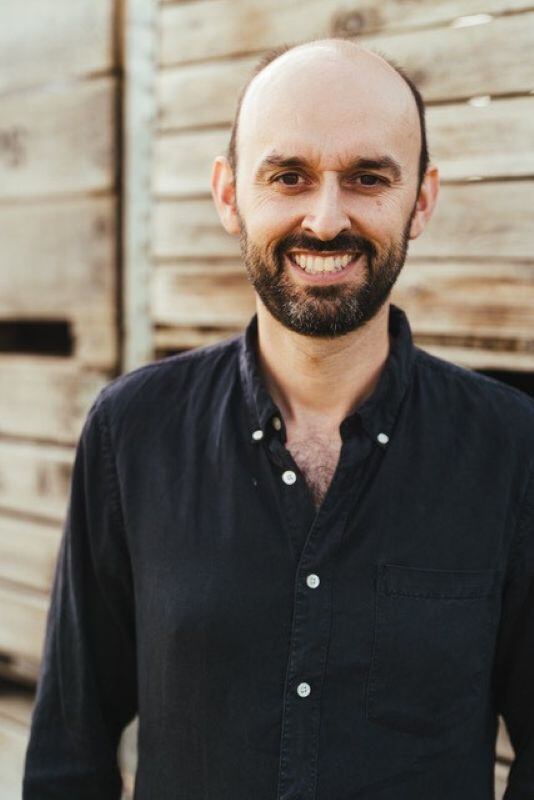
Investors should stop viewing agriculture solely through the lens of food production and instead recognise its role in preventative healthcare if the sector is to attract more venture capital, according to Antony Yousefian, general partner at The First Thirty.
Speaking ahead of Agri-TechE’s Focus on Finance event on 17 September, Yousefian said the firm’s investment thesis is built around “agri-health” rather than traditional agri-tech.
“By focusing on value generation through better, healthier food further along the value chain, beyond the farm gate, developers can create business models that are more attractive to investors and better able to deliver the returns they expect from other sectors,” he said.
The approach reflects a belief that food should increasingly be viewed as a health intervention rather than simply a commodity, creating opportunities to tap into markets and investors that have historically backed healthcare, biotech and longevity businesses.
Attracting a wider pool of capital
Yousefian argues that one of agri-tech’s long-standing challenges has been generating venture-scale returns from a sector where margins are often squeezed at farm level.
As a result, The First Thirty has adopted a policy of avoiding investments that derive most of their revenue directly from farmers.
“There is not enough value in primary production to generate a margin,” he said. “You have to bring more value into the system or extract it from legacy businesses further away from the farm gate.”
Instead, the firm looks for technologies capable of creating measurable outcomes and capturing value further up or down the supply chain, from input providers through to food processors and retailers.
The strategy is already helping attract investors from outside conventional food and agriculture circles.
“We have found that the health-tech, biotech and longevity spaces are fertile ground for people to invest in agri-tech with our agri-health strategy,” said Yousefian.
A systems approach to investing
Unlike traditional venture capital models that rely on making large numbers of bets in the hope that a handful become major successes, The First Thirty takes what Yousefian describes as a systems-based approach.
The firm backs a smaller number of companies that can create additional value by working together.
“Each business in our portfolio can win on its own, but it can create more value by working with others,” he said.
The firm favours technologies that can gather data, recommend interventions and measure outcomes, creating feedback loops that strengthen their value proposition over time.
According to Yousefian, recent advances in artificial intelligence, falling sensor costs, cheaper genetic analysis and greater computing power are making such integrated approaches increasingly viable.
“Now feels different to before,” he said. “It’s a special time, which may now be the time for ag-tech.”
New exit opportunities emerging
Yousefian also believes the outlook for investor returns is improving as new routes to exit emerge.
While initial public offerings and trade acquisitions remain important, he expects private equity firms to play a growing role by acquiring and combining technology businesses around AI-driven operating models.
“The AI labs are already doing it, partnering with private equity to rebuild legacy businesses around an AI-first approach rather than selling them software,” he said.
For agri-tech companies built within interconnected portfolios, this could create opportunities for both individual acquisitions and larger system-level transactions.
Join the discussion
Antony Yousefian will speak at Agri-TechE’s Focus on Finance event on 17 September, along side other investment experts including Omar Habbal, co-founder of Bramble, and Chris Danks, head of agrifood at Innovate UK.
He will also appear at the World Agri-Tech Innovation Summit in London on 22 September, where he will host the Investors in the Hot Seat session.
The discussion will see early-stage founders question leading agri-investors on topics that are rarely addressed in pitch meetings, including how investors respond when start-ups are struggling, the rights they exercise and whether patient capital is genuinely long term or simply a talking point.


